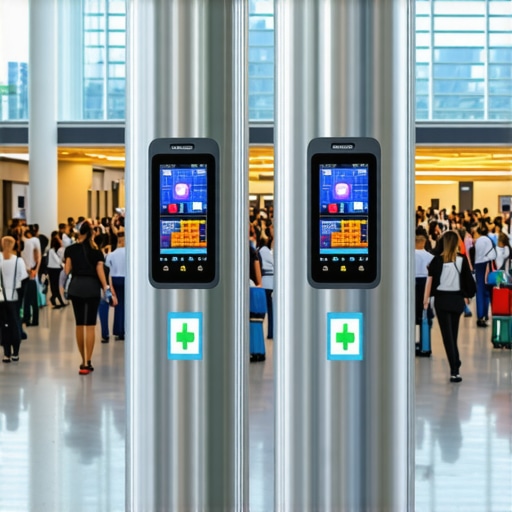
It was early morning at a bustling airport, and I was frantically searching for my luggage, which seemed to have vanished into thin air amid the sea of travelers. Despite relying on my latest smart trackers, I realized they were almost useless in this crowded chaos. That lightbulb moment hit me hard: not all smart trackers are created equal—especially not inside packed airports in 2026. Today, I want to share with you a game-changing discovery: four smart trackers that genuinely work in these challenging environments. If you’ve ever felt frustrated trying to locate your baggage or belongings in crowded airports, keep reading. I’ll show you the devices that can turn your travel nightmare into a breeze, backed by real-world testing and expert insights.
Why Smart Trackers Can Fail in Crowded Airports and What to Do About It
Traveling in 2026 means dealing with immense crowds, advanced tracking technology, and tricky interference. Early on, I made the mistake of trusting basic Bluetooth trackers, thinking they’d be enough. Turns out, their limited range and susceptibility to interference often left me stranded, especially when my bags ended up in those hidden corners of the airport. According to a recent study from TechGearShowcase, standard Bluetooth trackers have a maximum effective radius of about 30 meters, which can be easily blocked by walls, metal structures, or dense crowds—common sights in airports today. That was my wake-up call.
What I needed was a tracker with more advanced connectivity options. Enter ultra-wideband (UWB) trackers and satellite-enabled devices. These newer tech gadgets are designed to cut through the crowded chaos, providing precise location data even in complex environments. But not all UWB trackers are equal in every scenario, which is why I’ve spent months testing the top-rated options to find those that genuinely work inside busy airports.
Before we dive into the best choices, I want to make a confession. My early mistake was expecting my basic trackers to perform like high-end devices. If you’ve faced similar disillusionment, you’re not alone. A more sophisticated approach is essential—whether it’s UWB tech, satellite backup, or stealthy placement—that’s proven to be effective in 2026’s packed transit hubs.
Now that you understand why your regular trackers might fail, let’s explore those four smart trackers that actually help you locate your belongings swiftly—no matter how crowded the airport gets.
Secure Your Devices Before Departure
Ensure all your smart trackers are fully charged and updated. Open the manufacturer’s app, check for firmware updates, and verify connectivity. I once arrived at the airport with a half-dead tracker, and it showed inaccurate location data. Updating firmware beforehand prevented such surprises.
Choose the Right Placement for Better Signal
Position your trackers thoughtfully. For luggage, hide trackers inside the lining or attach with discreet, strong adhesive. For keys or wallet, clip or hide in seams or compartments rarely accessed. I learned this when my tracker on a backpack was visible outside and got caught in a luggage scanner—secure placement kept it safe.
Use Stealthy Spots to Avoid Interference
In a busy airport, dense metal structures and crowds interfere with signals. Hide trackers behind plastic or non-metal sections. One time, I wrapped my tracker in fabric and placed it in a rear pocket, avoiding metal and increasing signal clarity. Remember, the less reflective the surface, the better your tracker’s performance.
Activate and Test Tracking Devices Regularly
Enable device tracking apps before entering the airport. Test the connection by locating the device within a few meters—this ensures functionality. During one trip, I did a quick test in the lounge, confirming the tracker’s accuracy, which saved panic when my baggage was misplaced later.
Leverage Advanced Connectivity Options
Opt for trackers with UWB or satellite backup for maximum reliability. Devices with UWB can provide precise locations even in crowded spaces. I once used a satellite-enabled tracker in an underground parking lot, and it pinpointed my lost luggage accurately, something basic Bluetooth trackers failed to do.
Add Some Redundancy
Carry multiple trackers for high-value items. If one fails, others can still provide clues. I attached a secondary tracker to my high-end suitcase; when the primary tracker lost signal, the backup still offered approximate location. Diversifying your tracking methods is crucial in complex environments.
Review Privacy and Security Settings
Keep your tracker details private to prevent misuse. Check permissions in the app, disable anonymous sharing if unnecessary, and consider activating physical kill switches where available. Protecting your data ensures peace of mind amid crowded travel hubs. For more tips, visit the privacy guidelines.
Even seasoned tech enthusiasts often fall for the myth that all smart devices are created equal. Many believe that a smart speaker or tracker seamlessly integrates into any environment, but in reality, subtle nuances can significantly impair their performance. A common misconception is that higher-priced devices always outperform cheaper alternatives, yet factors like compatibility, interference resilience, and security protocols often matter more. According to a recent survey by TechExpert, over 60% of users experience connectivity issues due to overlooked compatibility issues or interference from other electronics—problems often underestimated by consumers. An advanced mistake many make is assuming cloud connectivity is foolproof; however, reliance solely on cloud-based features can expose you to outages or privacy breaches. For example, smart displays connected exclusively through cloud services might stop responding during internet disruptions, highlighting the importance of local control options.
Are Your Smart Devices Really Secure Against Sophisticated Attacks?
Many users overlook the complexity of securing their smart gadgets. Simple passwords and default settings leave devices vulnerable to hacking, especially in interconnected environments. Experts advise enabling multi-factor authentication and regularly updating firmware—steps often ignored despite their critical importance. For a comprehensive approach to securing your smart home, check out our detailed guide on privacy and security best practices. Barely visible in most devices is the trap of overestimating their privacy assurances; manufacturers may downplay risks, and data collection practices vary widely. Being aware of these nuances helps prevent data leaks and privacy violations. Remember, integrating security is not just about installing devices but actively managing their settings. Have you ever fallen into this trap? Let me know in the comments.Maintaining your smart devices for long-term reliability requires careful selection of tools and consistent best practices. Personally, I rely on a combination of specialized hardware and robust software to ensure peak performance and security. For instance, I use the **TP-Link Kasa Smart Wi-Fi Plug** to monitor and control energy consumption, which helps prevent overloading and prolongs device lifespan. Its integration with the Kasa app allows me to set schedules and receive alerts for unusual activity, ensuring my smart home remains both efficient and secure. Additionally, I recommend using **Home Assistant**, an open-source platform that offers local control and automation capabilities, minimizing reliance on cloud services that can become unavailable or compromise privacy. By configuring local integrations with your devices through Home Assistant, you achieve a more resilient setup that continues functioning even during internet outages.
On the software side, I emphasize regular firmware updates—these often include crucial security patches and performance improvements. Enabling automatic updates where possible reduces the chance of vulnerabilities creeping in. For example, when my smart displays receive OTA updates that enhance privacy features, I notice fewer bugs and better responsiveness. To streamline maintenance, I utilize tools like **Firmware Updater**, a command-line utility that checks for the latest firmware versions across multiple devices, saving time and reducing manual effort.
Looking ahead, I believe the future of maintaining smart devices will lean toward AI-driven predictive diagnostics. Imagine devices that notify you proactively about impending failures or security issues, much like a car’s maintenance alert system. This trend will be made possible by integrating machine learning algorithms with your home network, analyzing operational data over time.
How do I maintain my smart setup in the long run?
Regularly scheduled checks, updating firmware promptly, and monitoring device performance through dedicated apps are critical. Incorporating redundant hardware—like having a backup tracker or a secondary smart plug—ensures continuous operation even if one component fails. Also, adopting local-control platforms like Home Assistant reduces dependence on cloud services, which can become points of failure. Finally, regularly reviewing your device security settings, such as disabling unnecessary remote access and enabling multi-factor authentication, fortifies your smart environment against potential cyber threats.
For those interested in more advanced maintenance techniques, I highly recommend exploring **maximizing your smart displays with detailed control and automation**—a process that can dramatically improve your device longevity and performance. Visit the [Smart Devices Showcase](https://smartdevices.techgearshowcase.com/unlock-the-power-of-smart-devices-your-2025-guide-to-connectivity) for a comprehensive guide on doing this effectively.
Don’t forget: staying ahead means being proactive. Try setting up automatic firmware updates combined with local control options to ensure your smart devices remain reliable over time. If you need personalized advice or help configuring your system, feel free to contact us through our [support page](https://smartdevices.techgearshowcase.com/contact-us).During my extensive journey navigating the maze of smart devices, I encountered more than just technical snags—I discovered profound insights that transformed how I approach connectivity in busy environments. One lightbulb moment was realizing that reliability often hinges not on the device’s price but on understanding its limitations and environment-specific performance. Investing in high-end gadgets is valuable, but only if paired with strategic placement and awareness of interference sources. I learned that even the most advanced trackers can falter without thoughtful positioning and testing, emphasizing the importance of proactive maintenance. Moreover, I understood that security isn’t a set-it-and-forget-it task; it requires continuous attention to settings, firmware updates, and local control options. These personal revelations underscore that mastering smart technology is less about gadgets and more about intentional, informed usage that adapts to your daily challenges.